The Long Work of Remembrance: How Restoration Teams Battle Time to Keep the B-36 Peacemaker Alive
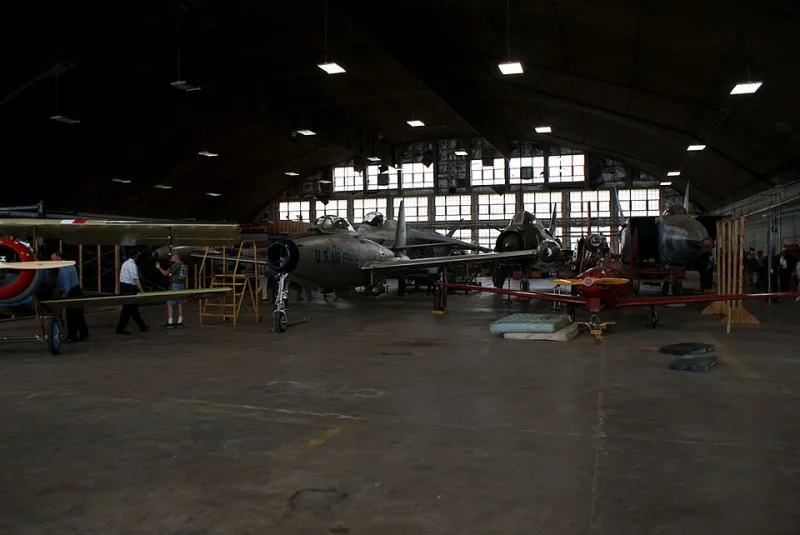
Photo: Valder137, CC BY 2.0, via Wikimedia Commons
Of the 384 B-36 Peacemakers produced between 1946 and 1954, only four complete airframes survive today. Each one represents not merely a relic of Cold War deterrence, but the result of decades of painstaking conservation work carried out by dedicated teams operating under extraordinary constraints. To walk the floor of a hangar housing one of these aircraft is to appreciate, almost immediately, the sheer scale of the preservation challenge involved. The B-36 is not a fighter jet that can be wheeled into a climate-controlled room and left to history. It is, by any measure, a colossus — and keeping a colossus intact requires resources, ingenuity, and a particular kind of institutional commitment that few organizations can sustain over the long term.
The Scale Problem: When Size Becomes the Enemy
The B-36 Peacemaker's most immediately apparent characteristic — its immense physical size — is also its most persistent conservation adversary. With a wingspan of 230 feet and a fuselage stretching nearly 163 feet, the aircraft presents challenges that simply do not arise with smaller historical planes. Standard museum hangars were not designed to accommodate an airframe of this magnitude, and the few institutions that house surviving B-36s have been required to make significant infrastructure investments simply to provide adequate shelter.
At the National Museum of the United States Air Force in Dayton, Ohio, the B-36J on display occupies a substantial portion of one of the museum's largest gallery spaces. Climate regulation across an area that size is a continuous engineering challenge. Fluctuating temperatures and humidity levels accelerate the degradation of aluminum skin panels, rubber seals, wiring insulation, and painted surfaces. Restoration coordinators must monitor environmental conditions across the entire airframe, identifying microclimates within the structure itself — particularly in the aircraft's six bomb bays and its pressurized crew tunnel — where moisture tends to accumulate and promote corrosion.
Corrosion: The Invisible Adversary
For any aluminum aircraft that spent decades outdoors or in semi-exposed storage, corrosion is the primary threat to long-term structural integrity. The B-36s that survived the mass scrapping campaigns of the late 1950s did so largely by accident — reassigned to training roles, donated to museums, or simply overlooked long enough for preservation advocates to intervene. Many arrived at their current institutions in significantly deteriorated condition, bearing the consequences of years of neglect.
Corrosion in a B-36 airframe is not a surface-level problem. The aircraft's complex internal structure — its deep wing spars, its pressurized fuselage sections, the intricate mechanical linkages connecting its flight control surfaces — creates innumerable cavities where moisture collects and oxygen-driven oxidation proceeds unseen. Restoration teams typically employ borescope cameras to inspect inaccessible interior spaces, and in some cases have been required to carefully disassemble sections of the airframe to treat corrosion that would otherwise compromise structural integrity over time.
The treatment process itself demands expertise that is increasingly difficult to find. Technicians working on B-36 airframes must understand the specific aluminum alloys used in mid-twentieth-century aircraft construction, the appropriate chemical inhibitors for treating active corrosion without damaging adjacent materials, and the structural engineering principles necessary to assess whether corroded components can be treated in place or must be replaced entirely.
The Parts Problem: Sourcing Components for an Aircraft No Longer Made
The B-36 Peacemaker was retired from active service in 1959. In the more than six decades since, virtually every manufacturer that supplied components for the aircraft has either ceased production of those parts, restructured through mergers and acquisitions, or closed entirely. The Pratt & Whitney R-4360 Wasp Major radial engines that powered the aircraft's six pusher propeller mounts, for instance, have not been manufactured since the early 1950s. The General Electric J47 turbojets fitted in the underwing pods are similarly unavailable through conventional supply chains.
Restoration teams working on B-36 components must therefore rely on a combination of strategies. Cannibalization from parts aircraft — incomplete or heavily damaged airframes acquired specifically as donor machines — provides one avenue, though the pool of available donor aircraft is itself vanishingly small. Specialty aerospace salvage dealers occasionally surface period-correct hardware, instruments, and mechanical components, though sourcing these items requires extensive networking within the vintage aviation community and considerable patience.
In some instances, museums have commissioned the fabrication of replica components using period-accurate materials and manufacturing techniques. This approach, while expensive, is sometimes the only viable option for restoring visible elements of the aircraft to exhibition standard. Transparency with the public about which components are original and which are reproduction is considered an ethical imperative within the conservation community, and most institutions maintain detailed documentation records distinguishing between the two.
The Human Capital Challenge
Perhaps the most underappreciated dimension of B-36 preservation is the difficulty of developing and retaining the human expertise necessary to do the work. The aircraft's original maintenance technicians — the men who serviced B-36s on Strategic Air Command bases across the country during the 1950s — are now in their nineties, and their numbers diminish with each passing year. The institutional knowledge they carry represents an irreplaceable resource, and the aviation preservation community has made significant efforts to document their recollections through oral history programs before that knowledge is lost entirely.
Training a new generation of technicians capable of working on B-36 airframes requires significant investment. Because the aircraft's systems differ substantially from those of any currently operational platform, apprentice technicians cannot develop relevant skills through conventional aviation maintenance programs. Institutions with B-36s in their collections must often develop their own training curricula, pairing junior staff with experienced volunteers or retired aerospace professionals who have relevant historical knowledge.
Volunteer labor plays an essential role in many B-36 restoration programs. Retired engineers, former military aviation mechanics, and skilled craftspeople contribute thousands of hours annually to preservation projects at institutions across the country. Managing and coordinating these volunteer contributions — ensuring consistency, quality, and safety — represents a significant administrative undertaking in its own right.
Funding the Work: The Financial Reality of Large-Scale Preservation
Restoring and maintaining a B-36 Peacemaker is not inexpensive. Estimates for comprehensive restoration projects at major institutions have historically run into the hundreds of thousands of dollars, with ongoing annual maintenance costs adding substantially to that figure. Federal funding through programs administered by the Institute of Museum and Library Services and the National Endowment for the Humanities provides some support, but institutional budgets remain chronically constrained relative to the scope of the work required.
Private philanthropy fills a critical gap. Donations from veterans' organizations, aerospace industry foundations, and individual supporters with personal connections to the B-36 program have funded numerous restoration milestones over the years. Some institutions have developed dedicated endowment funds specifically for B-36 preservation, recognizing that the long-term nature of the work demands a stable, recurring funding base rather than reliance on episodic grants.
Why the Work Matters
The effort invested in preserving the surviving B-36 Peacemakers is, at its core, an act of historical stewardship. These aircraft embody a pivotal chapter in American strategic history — a period when the nation's security rested on the credible threat of intercontinental nuclear delivery, and when the men and machines of Strategic Air Command stood as the primary guarantors of Western deterrence. To allow the last physical representatives of that era to deteriorate through inaction would be to diminish the historical record in ways that no archive, however comprehensive, could fully compensate for.
Restoration teams working on B-36 airframes understand this responsibility acutely. Their work proceeds methodically, often invisibly, in hangars far from public attention. But the results — an aircraft preserved to exhibition standard, accessible to visitors who may never have imagined the scale of mid-century American airpower — represent one of the most meaningful contributions the aviation preservation community can make to the nation's collective memory.