Diplomacy at Altitude: How the B-36 Peacemaker Reshaped American Foreign Policy Without Firing a Shot

In the years immediately following World War II, the United States found itself in possession of a weapon unlike any that had come before—not a missile, not a warhead, but an aircraft so vast and so capable that its very existence altered the calculus of international relations. The Convair B-36 Peacemaker never dropped a nuclear weapon in anger. It never flew a combat sortie over enemy territory. And yet, for roughly a decade, it functioned as one of the most consequential instruments of American diplomacy ever produced. Understanding how requires looking not at what the B-36 did, but at what it made others believe it could do.
The Architecture of Intimidation
When Strategic Air Command (SAC) began deploying B-36s in earnest in the late 1940s, American foreign policy was navigating treacherous terrain. The Soviet Union had detonated its first nuclear device in 1949, shattering Washington's assumption of atomic monopoly. Western Europe trembled with anxiety. Newly independent nations across Asia and Africa were being courted by Moscow. The Truman administration required something more than diplomatic rhetoric to anchor its foreign policy commitments—it needed a visible, credible symbol of American resolve.
The B-36 provided exactly that. With a wingspan of 230 feet, the capacity to carry nuclear payloads, and an intercontinental range that rendered the Atlantic and Pacific Oceans strategically irrelevant, the aircraft communicated a message that no State Department communiqué could match. Declassified National Security Council documents from the early 1950s indicate that senior American officials were acutely aware of the bomber's psychological utility, deliberately timing public announcements of B-36 deployments and capabilities to coincide with sensitive diplomatic moments.
Leverage Over Allies
Perhaps the least-examined dimension of the B-36's diplomatic role is the leverage it granted Washington over its own alliance partners. The formation of NATO in 1949 created a collective security architecture, but the alliance's credibility rested almost entirely on the American nuclear guarantee—the promise that an attack on Western Europe would invite devastating retaliation against the Soviet Union itself. Without a credible delivery system, that guarantee was hollow. The B-36 made it tangible.
Declassified State Department cables from the early 1950s reveal that American negotiators frequently invoked SAC's bomber capabilities—implicitly referencing the B-36—during discussions with European governments reluctant to contribute more substantially to collective defense. The underlying message was consistent: the United States was bearing an extraordinary burden on behalf of the alliance, and that burden demanded reciprocal political and military cooperation. The B-36 was, in effect, a bargaining chip measured in aluminum and avgas.
British officials, for their part, were simultaneously reassured and unnerved by the aircraft's capabilities. Foreign Office records from the period reflect a tension familiar to junior alliance partners throughout history: gratitude for the protection offered and anxiety about dependence on a patron whose decision-making they could not control. The B-36's sheer reach meant that any conflict the United States chose to escalate could, theoretically, be escalated without British consent or participation—a prospect that shaped London's own nuclear ambitions throughout the decade.
The Soviet Calculation
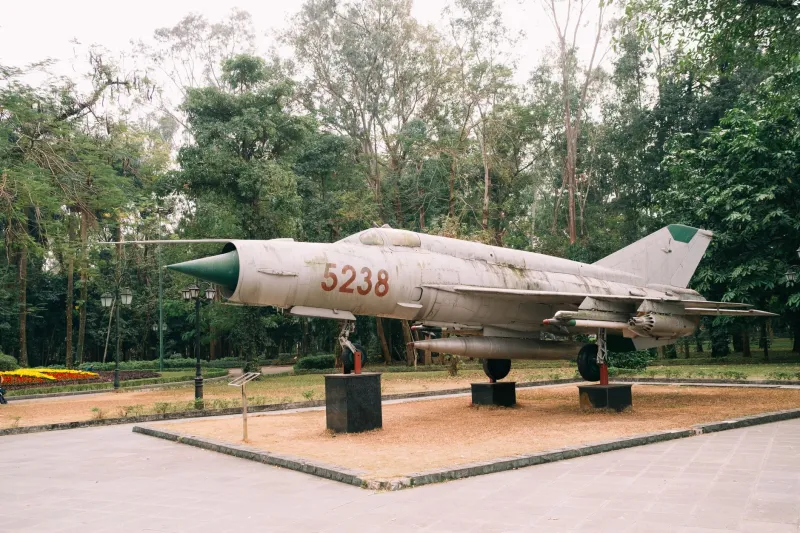
On the other side of the Iron Curtain, the B-36's existence prompted a strategic reassessment of enormous consequence. Soviet military planners, confronting an aircraft capable of reaching any target within the USSR from bases in the continental United States, were compelled to divert extraordinary resources toward air defense infrastructure. Radar networks, interceptor aircraft programs, and surface-to-air missile development all accelerated in direct response to the B-36 threat.
This diversion of resources had measurable diplomatic effects. A Soviet military establishment consumed by the challenge of defending against intercontinental bombers was a military establishment with constrained capacity for adventurism elsewhere. American policymakers, aware of this dynamic through signals intelligence and diplomatic reporting, factored the B-36's indirect pressure into their assessments of Soviet behavior during crises such as the Korean War armistice negotiations and the early confrontations over Berlin.
Declassified CIA estimates from 1952 and 1953 explicitly noted that Soviet leadership regarded SAC's bomber fleet—with the B-36 as its centerpiece—as the primary strategic threat to the USSR's survival. That perception, the analysts argued, was itself a form of deterrence operating continuously in the background of every diplomatic exchange between Washington and Moscow.
The Bomb That Was Never Dropped
There is a particular kind of power that belongs to weapons that are never used. Military historians have long recognized that the threat of force, credibly communicated, can achieve objectives that the actual application of force cannot—because the use of force consumes the threat, whereas restraint preserves it indefinitely. The B-36 exemplified this principle with unusual clarity.
Throughout the Korean War, the Eisenhower administration wrestled with how to leverage American nuclear superiority to bring the conflict to a conclusion. Declassified records from the National Security Archive reveal that senior officials discussed, without ever implementing, scenarios in which the visible preparation of B-36 units for potential nuclear strikes might signal American seriousness to both Chinese and Soviet leadership. The aircraft's presence on flight lines, its crews at heightened readiness, its capabilities publicly acknowledged—these constituted a form of communication that operated entirely outside formal diplomatic channels.
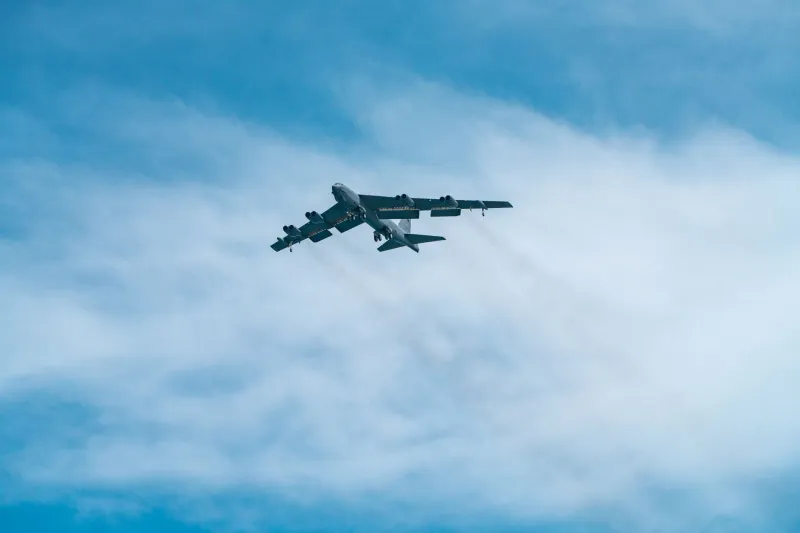
This pattern repeated itself during the Taiwan Strait crises of the mid-1950s, where American strategic bomber capabilities served as an implicit backdrop to Washington's assurances to Taipei and its warnings to Beijing. The B-36, by then approaching obsolescence but still operational, remained part of that backdrop until the B-52 Stratofortress assumed the role definitively.
A Legacy Written in Restraint
The B-36 Peacemaker's name, chosen with deliberate care by its advocates, reflected an aspiration that its operational history ultimately validated. The aircraft served as a cornerstone of American strategic deterrence during one of the most dangerous decades in modern history, a period when miscalculation could have produced catastrophic consequences. That it never delivered a weapon in combat is not a mark against its legacy—it is the very measure of its success.
For students of American foreign policy, the B-36's story offers an enduring lesson about the relationship between military capability and diplomatic influence. Power that is visible, credible, and clearly communicated can shape the behavior of adversaries and allies alike without ever being exercised. The men who designed, built, flew, and maintained the B-36 were participants in a vast strategic enterprise whose most important outcomes were the crises that never escalated, the wars that never started, and the negotiations that concluded—however imperfectly—without resort to the weapons the aircraft was built to carry.
At the B-36 Peacemaker Museum, we are committed to preserving not only the physical artifacts of this remarkable aircraft's history, but the full complexity of its strategic and diplomatic legacy. The Peacemaker's story is, at its core, a story about how nations communicate resolve—and how, on occasion, the most powerful statement a weapon can make is the one it never delivers.