Voices from the Flight Deck: Oral Histories of the Men Who Flew and Maintained the B-36
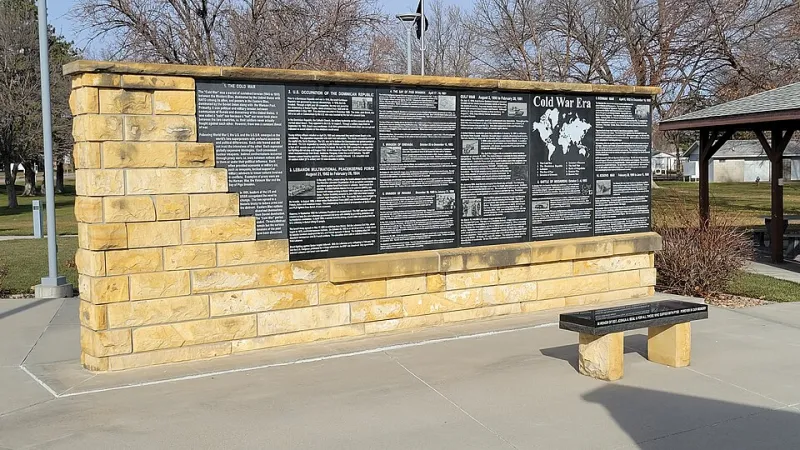
Photo: RuralResurrection, CC BY-SA 4.0, via Wikimedia Commons
An aircraft's history is written in more than specifications and mission logs. It lives in the memories of the men who strapped themselves into its seats before dawn, who traced oil leaks across rain-soaked tarmacs at Carswell Air Force Base in Texas, who ate cold sandwiches in a pressurized tunnel thirty thousand feet above the Atlantic, and who carried, without ever speaking of it publicly, the knowledge that they were part of America's most consequential military deterrent. The B-36 Peacemaker's human story is one the B-36 Peacemaker Museum is committed to preserving—and it is told best in the words of those who lived it.
"She Was Never Pretty, But She Was Reliable"
Retired Lieutenant Colonel Harold Dempsey, who flew B-36s with the 7th Bomb Wing at Carswell from 1952 to 1957, describes his first encounter with the aircraft with characteristic plainness. "You walked out on the ramp and she just sat there—enormous. Nothing you'd seen before prepared you for the scale of it. The wingspan was longer than the Wright Brothers' first flight. You almost felt sorry for the thing, having to get airborne."
Dempsey's affection for the aircraft, however, was genuine and hard-earned. "She was never pretty, but she was reliable if you knew her. And knowing her took time. The reciprocating engines needed constant attention. You had to listen to them, feel what they were telling you. A pilot who didn't respect that relationship was going to have a very long day."
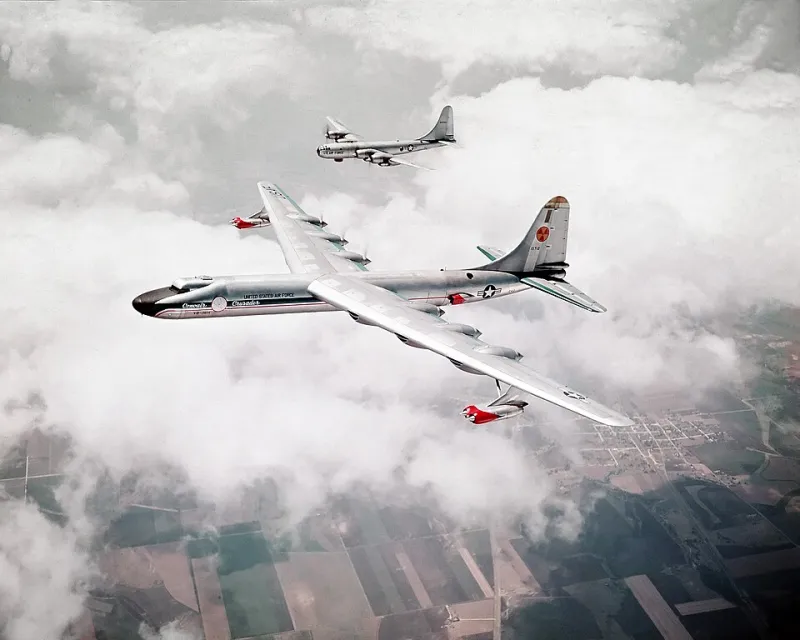
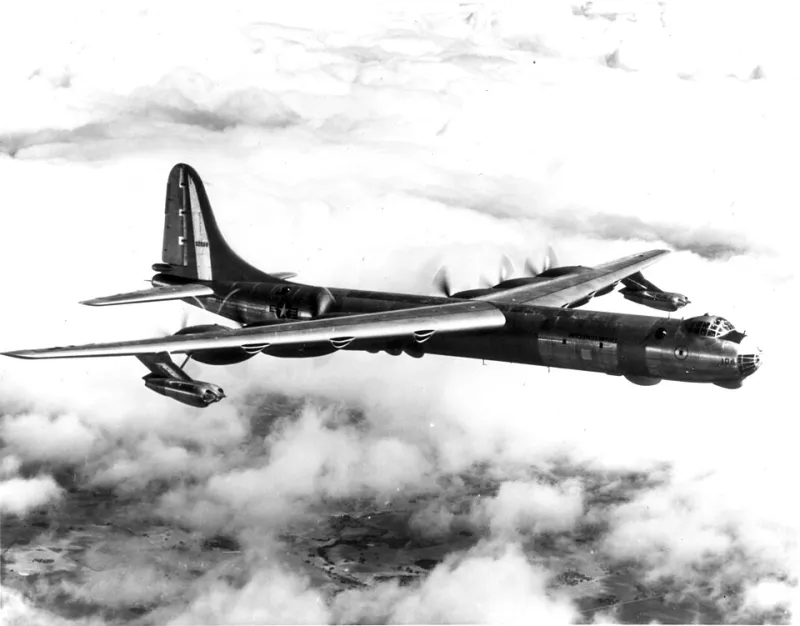
His recollection of the aircraft's hybrid propulsion system—the six Pratt & Whitney R-4360 piston engines supplemented by four General Electric J47 jet pods—captures both its ingenuity and its demands. "The jets gave you power when you needed it, but they burned fuel like nothing you'd seen. You ran them for the climb and over the target area, then you shut them down for the cruise. It was a discipline, almost a ritual. Every crew developed its own rhythm for it."
The Mechanics Who Kept Them Flying
No account of the B-36's operational life is complete without acknowledging the maintenance crews whose labor made every mission possible. Master Sergeant Raymond Kowalski, who spent six years servicing B-36s at Ellsworth Air Force Base in South Dakota, remembers the aircraft with the particular intimacy of someone who knew its anatomy from the inside out.
"There were people who thought the flight crews were the heart of the operation," he says, with a measured smile. "And they were important, sure. But those aircraft didn't fly themselves to the flight line. We worked nights, weekends, in weather that would make a sane man quit. South Dakota winters are not forgiving, and neither was the B-36's maintenance schedule."
Kowalski describes the engine change process as one of the defining challenges of his career. "Replacing one of those R-4360s was a multi-day operation. The engine itself weighed close to four thousand pounds. You needed the right equipment, the right team, and the right weather. We did it in blizzards. We did it with frostbite. You didn't delay a mission because you were cold."
His pride in the work is undiminished by the passage of decades. "When that aircraft took off and climbed out clean, and you knew your hands had been on every bolt of a fresh engine—that was something. You didn't need anyone to tell you it mattered."
Marathon Missions and the Weight of Silence
The B-36's intercontinental range translated directly into missions of extraordinary duration. Former radar operator Technical Sergeant Gerald Fontaine, who served with the 92nd Bomb Wing at Fairchild Air Force Base in Washington, recalls flights that tested the limits of human endurance as much as mechanical capability.
"We had missions that ran twenty-four hours, sometimes longer. You ate, you slept in shifts, you worked your station, and then you did it all again. The aircraft had a sleeping area aft of the forward crew compartment—a tunnel, really, with bunks. It was noisy, it vibrated constantly, and it was never quite warm enough. But you slept, because you had no choice."
Fontaine speaks carefully when the subject of nuclear weapons arises. Like many veterans of Strategic Air Command, he observed strict discretion about the specifics of his missions for decades, a habit of mind that persists even now. "We knew what we were carrying on certain missions. You didn't talk about it. You didn't write home about it. You did your job, and you trusted that the people who gave you the order had thought it through. That was the deal."
The psychological weight of that responsibility, he acknowledges, was not evenly distributed. "Some men handled it without much trouble. Others carried it differently. We didn't have the language for what we'd call stress today. You just flew the mission and came home, and you were glad to be home."
Near-Disasters and the Bonds They Forged
The B-36's operational record, while remarkably clean given the complexity of the aircraft and the demands of Cold War readiness, was not without its harrowing moments. Former co-pilot Captain James Aldrich recounts an engine fire over the Pacific during a 1955 training mission that he describes, with characteristic understatement, as "a situation that required everyone's full attention."
"We lost one engine on the port side to fire and had to feather it. The fire suppression system worked, which was a relief. But then we had a second engine running rough on the same side. You're doing the math in your head—six engines, four jets, how much can you lose and still make it home? We made it home. But it was a long flight back."
Aldrich credits the crew's training and, perhaps equally, their collective composure, for the outcome. "Twelve men on that aircraft. Every one of them did exactly what they were supposed to do. No panic, no wasted motion. When it was over and we were on the ground, nobody made a big speech about it. We filed the paperwork and went to dinner. That was the culture. You didn't dramatize. You adapted and you moved on."
The camaraderie forged in those moments, veterans consistently report, was among the most enduring gifts of their service. "The men I flew with in those years—I'm still in contact with some of them," says Dempsey. "You go through something like that together, you're connected in a way that doesn't require explanation."
Preserving What Cannot Be Reconstructed
The B-36 Peacemaker Museum regards the collection of these oral histories as one of its most urgent preservation responsibilities. The aircraft themselves—the handful that survive in museums across the country—can be maintained, restored, and displayed. The memories of the men who flew and serviced them cannot be reconstructed once they are lost.
In recent years, the museum has partnered with veterans' organizations and academic institutions to conduct recorded interviews with surviving B-36 crew members and maintainers, creating an archive that will outlast its contributors. Each account adds texture and specificity to the historical record that no official document can supply.
As Master Sergeant Kowalski observed at the conclusion of his own interview: "People look at that airplane in a museum and they see a machine. I see the guys who worked on it with me. I hear the engines. You can't put that in a display case. But maybe you can write it down, and that's something."
It is, indeed, something—and at the B-36 Peacemaker Museum, we are committed to ensuring it is not lost.