From Peacemaker to Raider: How 1950s Strategic Doctrine Still Shapes the Modern Bomber Force
When the last operational B-36 Peacemaker was retired from active service in February 1959, observers might have been forgiven for assuming that the aircraft's influence would fade alongside its distinctive twelve-engine roar. History has proven otherwise. The strategic principles that General Curtis LeMay and his planners at Strategic Air Command (SAC) forged around the Peacemaker—long-range deterrence, continuous airborne readiness, and the deliberate projection of overwhelming reach—did not dissolve with the aircraft that embodied them. Instead, those principles migrated quietly into the institutional memory of the United States Air Force, where they continue to shape doctrine, procurement decisions, and strategic thinking to the present day.
Understanding that continuity requires revisiting what made the B-36 era so intellectually consequential in the first place.
The Doctrine That the Peacemaker Made Possible
Before the B-36 entered service in 1948, American strategic bombing doctrine was largely an extrapolation of World War II experience—mass formations, theater-range operations, and the assumption that forward bases would always be available. The Peacemaker changed the underlying geometry of that thinking. With an unrefueled combat radius approaching 3,500 miles and a maximum range that could carry it from American soil to virtually any point on the Eurasian landmass, the B-36 made intercontinental deterrence a practical reality rather than a theoretical aspiration.
SAC's planners responded by developing what historians of airpower now recognize as the first coherent doctrine of nuclear deterrence through continuous presence. The logic was straightforward but revolutionary: an adversary who could never be certain that American bombers were not already airborne—already positioned, already armed—faced a qualitatively different deterrent calculus than one who understood that retaliation would require hours of preparation and vulnerable runway operations. The Peacemaker's sheer endurance made that ambiguity operationally sustainable for the first time.
"What SAC built around the B-36 wasn't just an operational posture," notes Dr. Richard Halloran, an independent historian specializing in Cold War airpower. "It was a philosophy of deterrence that treated the bomber force itself as a continuous geopolitical signal. The aircraft was always the message, not just the weapon."
Airborne Alert and the Logic of Invulnerability
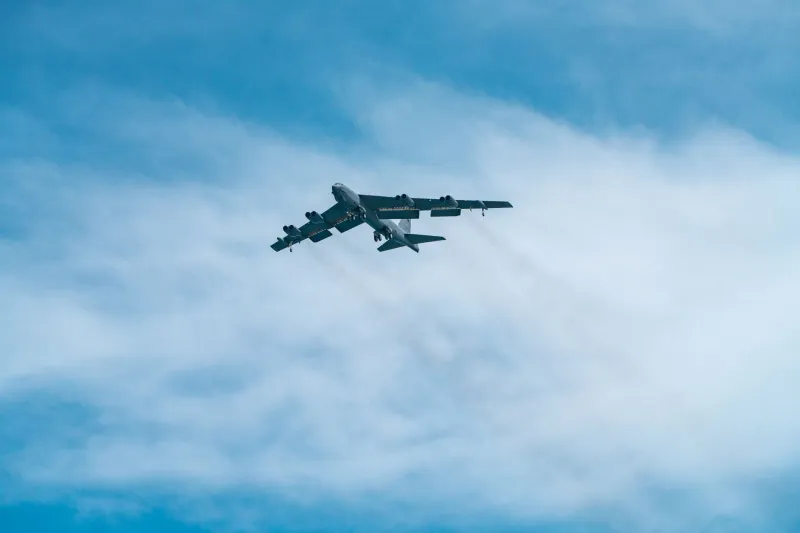
Perhaps the most enduring legacy of the Peacemaker era is the concept of airborne alert operations—keeping a portion of the nuclear-armed bomber force continuously aloft so that no first strike could destroy it on the ground. While the B-36 itself was not routinely flown in dedicated airborne alert configurations (that practice became more systematic with the B-52 under Operation Chrome Dome beginning in 1958), the intellectual and logistical groundwork was laid during the Peacemaker's operational tenure.
SAC's insistence during the early 1950s on dispersed basing, rapid-reaction alert procedures, and the maintenance of aircraft in a perpetual state of near-readiness directly anticipated the airborne alert doctrine that followed. The underlying premise—that survivability and credibility were inseparable—became so thoroughly embedded in Air Force culture that it survived the transition from propeller-driven intercontinental bombers to jets, and from jets to the stealth platforms of the present century.
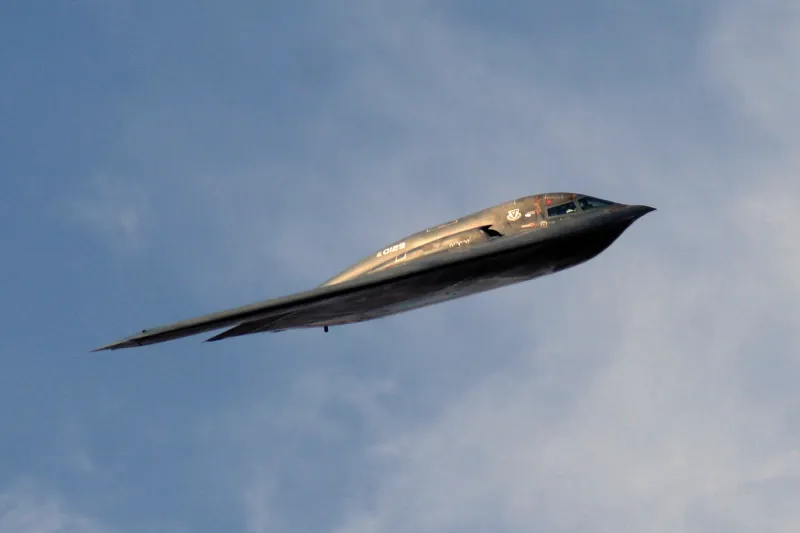
Today's Air Force Global Strike Command, the institutional successor to SAC, continues to operate under a doctrine that prizes survivability through unpredictability and continuous readiness. The B-2 Spirit's low-observable characteristics and the B-21 Raider's emphasis on penetrating contested airspace without detection represent technological evolutions of the same core insight: a bomber that cannot be reliably located or destroyed before it delivers its payload is a more credible deterrent than one that depends on the survivability of fixed infrastructure.
The Intellectual Lineage: From LeMay to the B-21
Tracking the precise transmission of strategic ideas across seven decades requires careful attention to institutional channels—professional military education, doctrine publications, and the accumulated experience of successive generations of aircrew and planners. The Air Force's foundational doctrine document, Air Force Doctrine Publication 3-70, which governs strategic attack operations, reflects concepts whose origins are recognizable to any serious student of the Peacemaker era.
The emphasis on "holding at risk" an adversary's most valued assets—including leadership, nuclear forces, and critical infrastructure—echoes the target sets that SAC's planners developed in the early 1950s with the B-36 as their primary delivery platform. The insistence that strategic bombers must be capable of operating from the continental United States without dependence on forward basing mirrors the operational philosophy that the Peacemaker's intercontinental range first made credible.
"The B-36 forced American strategists to think globally in a way that simply hadn't been necessary before," observes retired Air Force Brigadier General Thomas Calloway, who served as a B-52 instructor pilot and later as a staff planner at Air Combat Command. "Once you've built a force around the idea that you can reach anywhere on earth from American soil, that assumption becomes load-bearing. You never give it up. You just find better aircraft to carry it forward."
The B-21 Raider, Northrop Grumman's next-generation stealth bomber currently in advanced development and early production, represents the most recent expression of that load-bearing assumption. Its design priorities—penetrating survivability, intercontinental range, and compatibility with both conventional and nuclear munitions—are philosophically continuous with the requirements that shaped the B-36 program nearly eighty years earlier.
Deterrence as Presence: The Psychological Dimension
One aspect of Peacemaker-era doctrine that deserves particular attention is its explicit recognition of deterrence as a psychological phenomenon as much as a military one. SAC under LeMay understood that the B-36's deterrent value derived not merely from its destructive capacity but from the adversary's awareness of that capacity and belief in its employment. Consequently, SAC cultivated a public posture of readiness and resolve that was itself a strategic instrument.
This insight—that the perception of capability matters as much as the capability itself—remains central to contemporary deterrence theory. The Air Force's periodic bomber task force deployments to the Indo-Pacific region, in which B-1, B-2, and B-52 aircraft conduct visible operations from forward locations, reflect the same logic that animated Peacemaker-era SAC exercises and deployments. The bomber's presence communicates resolve; its reach communicates consequences.
Preserving the Doctrine Alongside the Aircraft
For visitors to institutions like the B-36 Peacemaker Museum, the surviving aircraft on public display are more than engineering artifacts. They are three-dimensional records of a strategic moment that permanently altered how the United States thinks about power, deterrence, and the relationship between military capability and political will. The doctrine that the Peacemaker helped create did not end when the aircraft was retired. It matured, adapted, and found new expression in every generation of strategic bomber that followed.
Understanding that continuity is part of what makes the preservation of B-36 history genuinely consequential. The aircraft's legacy is not merely historical—it is operational, alive in the planning documents, training syllabi, and strategic concepts that govern America's bomber force today. The Peacemaker's shadow, it turns out, stretches a very long way.