Eyes in the Dark: The Radar Technology That Made the B-36 Peacemaker a Nearly Unbeatable Weapon
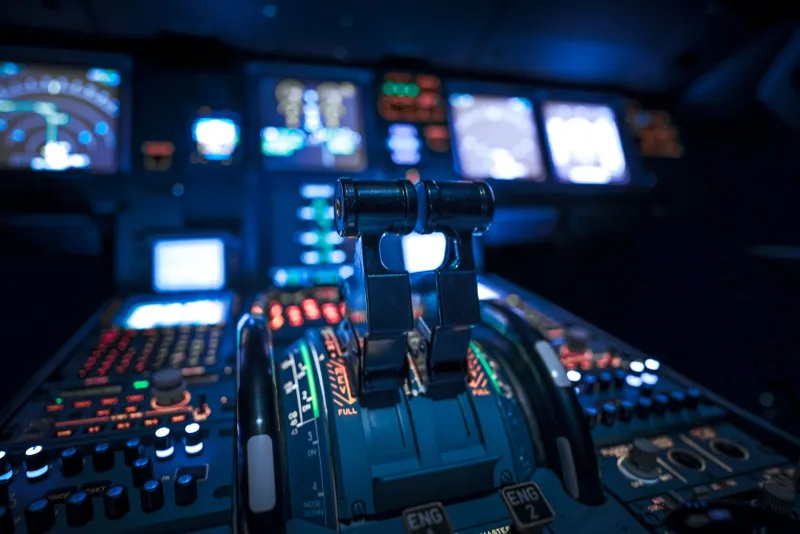
Long before stealth aircraft dominated headlines, the B-36 Peacemaker achieved a different kind of invisibility — one born not from angular fuselages but from the mastery of electromagnetic waves. The aircraft's sophisticated radar systems granted American aircrews the ability to navigate, acquire targets, and survive in conditions that would have rendered earlier bombers helpless. Understanding these technologies reveals why Soviet air defense commanders viewed the Peacemaker with a mixture of frustration and genuine alarm.
The Problem That Radar Was Asked to Solve
By the late 1940s, strategic bombing doctrine had absorbed painful lessons from World War II. Daylight precision raids over Europe had proven devastatingly costly. Nighttime operations reduced losses but introduced a new crisis: crews could not reliably find, much less accurately strike, targets obscured by darkness, cloud cover, or industrial haze. The B-36, conceived as America's intercontinental deterrent, could not afford such limitations. A bomber capable of flying from bases in Texas or Maine to targets deep inside the Soviet Union was worthless if its crews arrived blind.
Convair and the U.S. Air Force understood from the outset that the Peacemaker's effectiveness would depend as much on what its crews could see as on how far or how high the aircraft could fly. The solution arrived in the form of integrated radar systems that, for their era, represented some of the most advanced airborne electronics ever installed in a production aircraft.
The AN/APQ-24 Bombing-Navigation System
At the heart of the B-36's offensive capability was the AN/APQ-24, a bombing-navigation radar system derived from wartime research and refined specifically for strategic operations. Unlike the rudimentary sets carried by B-17s and B-24s during the Second World War, the APQ-24 was designed to function as a precision instrument under nearly any atmospheric condition.
The system operated on centimetric wavelengths, which provided a sharper ground return and allowed radar operators — known as bombardier-navigators — to distinguish meaningful terrain features from background clutter. Rivers, coastlines, urban grids, and large industrial complexes appeared on the scope with sufficient clarity to serve as reliable reference points, even when the aircraft was operating at altitudes above 40,000 feet. This capability transformed the B-36 from a blunt instrument into a precision weapon capable of delivering nuclear ordnance with a degree of accuracy that genuinely alarmed Soviet defense planners.
The APQ-24 also incorporated an offset bombing mode, a technique that allowed crews to aim at a radar-visible reference point near the actual target rather than at the target itself. This workaround proved invaluable when the intended aim point — a missile facility, a military headquarters, a transportation hub — generated insufficient radar return on its own.
Navigation Across Intercontinental Distances
Delivering a bomb accurately is only half the challenge. Reaching the target after flying thousands of miles across featureless ocean and hostile territory is the other. The B-36's navigation suite addressed this problem through a combination of radar position-fixing and the AN/APN-9 LORAN receiver, which allowed crews to determine their position by measuring the timing difference between signals broadcast from ground stations.
Together, these systems enabled navigators to maintain positional awareness throughout missions that could last well over twenty hours. When LORAN signals were unavailable — as they often were over the interior of the Soviet Union — radar ground-mapping took over, with crews identifying distinctive geographic features to confirm their track and make course corrections. The integration of these complementary methods meant that a B-36 crew rarely faced the terrifying uncertainty of being genuinely lost over enemy territory.
Defensive Radar and the Challenge Soviet Interceptors Faced
The Peacemaker's radar technology was not limited to offense and navigation. The aircraft also carried systems designed to detect and respond to airborne threats. The AN/APG-32 and related gun-laying radar sets were integrated with the B-36's remote-controlled defensive turrets, allowing gunners to track and engage interceptors in complete darkness or through cloud.
This capability fundamentally complicated the task facing Soviet fighter pilots. An interceptor crew that expected to approach undetected from the rear or below — standard tactics against bombers lacking rear-hemisphere radar coverage — found instead that the B-36's fire-control systems could detect their approach and cue defensive guns with considerable precision. Soviet MiG-15 and MiG-17 pilots, already challenged by the Peacemaker's extreme operating altitude, now had to contend with a bomber that could effectively shoot back in the dark.
The psychological dimension of this advantage should not be underestimated. Interceptor pilots who knew their approach was likely detected would naturally press their attacks with less aggression, reducing the accuracy of their own gunnery and increasing the probability that the bomber would survive the engagement.
Electronic Countermeasures: Jamming the Hunters
Beyond its own radar systems, the B-36 carried an evolving suite of electronic countermeasure equipment designed to degrade Soviet ground-controlled interception radar. These systems, housed in dedicated compartments and operated by specialized electronic warfare officers, could detect radar emissions, analyze their frequencies, and generate jamming signals calibrated to blind or confuse the enemy's tracking capability.
As Soviet air defense networks grew more sophisticated through the early 1950s — incorporating improved early-warning radar and more capable ground-control intercept stations — the electronic warfare systems aboard the B-36 were updated in parallel. This technological competition, largely invisible to the public at the time, represented one of the defining dynamics of Cold War deterrence: each improvement in defense was met by a corresponding refinement in penetration capability.
The Human Element: Training the Radar Crews
Technology without trained operators is merely expensive hardware. The Air Force invested heavily in preparing the specialists who would exploit the B-36's radar systems under operational conditions. Bombardier-navigators underwent rigorous training at dedicated facilities, learning to interpret scope imagery rapidly, execute offset bombing calculations under pressure, and maintain situational awareness across missions of extraordinary duration.
Veterans who served in radar roles aboard the Peacemaker have described the work as demanding in ways that differed sharply from the physical challenges faced by pilots or gunners. The radar operator sat in a dimly lit compartment, eyes fixed on a glowing display, translating abstract patterns of light and shadow into actionable intelligence — all while the aircraft droned through the stratosphere at temperatures far below zero and altitudes where an unprotected crew member would lose consciousness within seconds.
A Legacy Written in Electromagnetic Waves
The radar systems that equipped the B-36 Peacemaker did not merely make the aircraft more capable. They established a template for how American strategic bombers would be designed and operated for decades to come. The emphasis on all-weather, day-night capability; the integration of offensive and defensive radar into a coherent electronic architecture; the pairing of jamming systems with precision bombing equipment — all of these concepts flowed forward into the B-52 Stratofortress and beyond.
At the B-36 Peacemaker Museum, we believe that understanding the full scope of the aircraft's capabilities requires looking beyond its dimensions and its range to examine the invisible technologies that made those statistics meaningful. The Peacemaker's radar systems represent one of the most consequential chapters in the history of American airpower — a chapter written not in steel and aluminum, but in the silent language of electromagnetic waves sweeping across the darkness of the Cold War sky.