Steel Wings on the Silver Screen: The B-36 Peacemaker's Enduring Imprint on American Popular Culture

Photo: 1950s Cold War bomber aircraft vintage film Hollywood aviation, via i.pinimg.com
When a Warplane Became a Cultural Phenomenon
The B-36 Peacemaker was never simply a machine. From the moment it entered public consciousness in the late 1940s, this immense, propeller-driven giant occupied a peculiar and powerful place in the American psyche. It was simultaneously a reassuring guardian and a harbinger of catastrophic possibility — a paradox that made it irresistible to filmmakers, novelists, journalists, and artists throughout the 1950s.
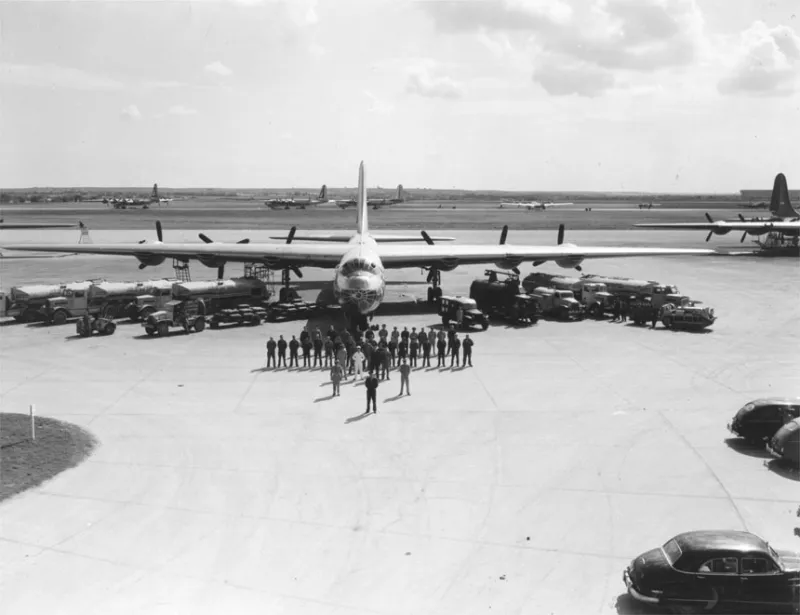
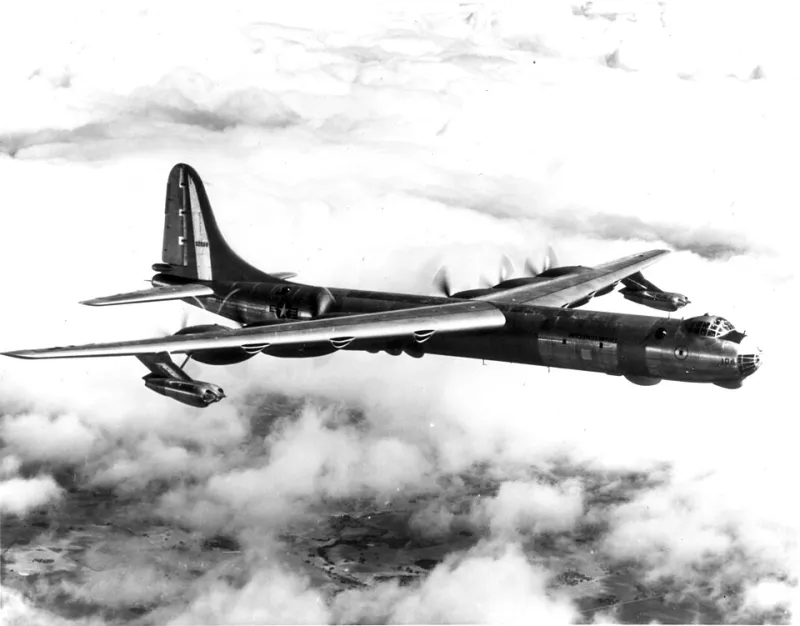
At a time when the Cold War was reshaping every dimension of American life, the B-36 offered a tangible, awe-inspiring focal point for anxieties and aspirations that were otherwise difficult to articulate. Its sheer scale — a wingspan stretching 230 feet, engines audible for miles — made it a spectacle unlike anything the public had encountered. And spectacle, in postwar America, translated almost inevitably into cultural currency.
Hollywood's Love Affair with the Peacemaker
No examination of the B-36's cultural legacy is complete without a close look at the 1955 Paramount Pictures film Strategic Air Command, starring James Stewart. Though the B-36 shared screen time with the newer B-47 Stratojet, its presence in the film was unmistakable and deliberate. The production gained unprecedented access to actual Air Force hardware, lending the film a documentary authenticity that resonated deeply with American audiences still processing the realities of nuclear deterrence.
Stewart's character, a professional baseball player recalled to active duty, served as a surrogate for the civilian viewer — someone compelled to reckon with the weight and necessity of America's airborne nuclear shield. The B-36's massive silhouette looming against desert skies was not merely backdrop; it was argument. The aircraft visually communicated what dialogue alone could not: that the United States had constructed something unprecedented in the history of warfare.
Less celebrated but equally significant was the 1955 film The McConnell Story, and the broader wave of aviation-themed productions that studios churned out during the decade. Television programs, including early docudramas broadcast on networks like NBC and CBS, frequently incorporated footage of B-36 operations, often sourced directly from Strategic Air Command public affairs offices eager to project strength to both domestic and international audiences.
Science Fiction and the Shadow of the Peacemaker
The B-36's influence extended well beyond conventional cinema. In the fertile landscape of 1950s science fiction literature, the aircraft — or thinly veiled versions of it — appeared with striking regularity. Pulp magazines such as Amazing Stories and Galaxy Science Fiction featured cover art depicting enormous bombers carrying civilization's fate across alien skies, imagery unmistakably informed by the B-36's distinctive profile.
Writers of the era grappled with the same duality that the aircraft embodied in real life: the notion that technological mastery and existential risk were inseparable companions. The B-36, capable of delivering nuclear weapons to targets thousands of miles distant, made that abstraction concrete. It was not coincidental that the golden age of American science fiction and the operational lifespan of the B-36 overlapped almost precisely.
Even beyond genre fiction, the aircraft permeated mainstream cultural discourse. Life magazine published extensive photo essays on Strategic Air Command operations, with the B-36 prominently featured. These spreads reached millions of households, cementing the bomber's image as a symbol of American industrial and military supremacy in the minds of readers who would never set foot near an airfield.
Shaping Public Perception of Nuclear Deterrence
Perhaps the most consequential dimension of the B-36's cultural role was its contribution to how ordinary Americans understood — and accepted — the doctrine of nuclear deterrence. The aircraft gave an abstract strategic concept a recognizable, even majestic form. When citizens read about the bomb or heard politicians debate defense appropriations, many could now picture the delivery mechanism: those enormous wings, those ten engines, that improbable silhouette cruising at altitude.
This visibility was not accidental. The Air Force and the Truman and Eisenhower administrations understood the value of public confidence in American deterrent capability. Allowing — indeed, encouraging — the B-36's presence in popular media served a strategic communications function, reassuring the domestic audience while signaling resolve to adversaries abroad.
The tension inherent in that reassurance, however, was never fully resolved. The same films and magazine articles that celebrated the bomber's power also, sometimes inadvertently, reminded viewers of what that power was ultimately intended to prevent: a nuclear exchange that would render the aircraft's very mission a failure. The Peacemaker's name thus carried an almost unbearable irony that artists and writers of the period returned to repeatedly.
A Legacy That Outlasted the Aircraft
The B-36 was withdrawn from service in 1959, replaced by jet-powered successors better suited to the evolving threat environment. Yet its cultural afterlife has proved remarkably durable. Modern aviation documentaries — including productions aired on channels such as the Smithsonian Channel and the History Channel — regularly revisit the aircraft's story, introducing it to audiences born decades after its retirement.
Archival footage of B-36 operations, preserved through the efforts of institutions like this museum and the National Archives, continues to surface in documentary films examining Cold War history. The aircraft's visual drama — those six pusher propellers, that cavernous bomb bay, the contrails stretching across a 1950s sky — retains a cinematic power that more modern aircraft, for all their sophistication, rarely match.
For aviation historians and enthusiasts, the B-36's cultural legacy is inseparable from its operational one. Understanding how the aircraft was perceived by the American public helps illuminate why the Cold War unfolded as it did — and why deterrence, for all its moral complexity, commanded the broad popular support that sustained it through decades of tension. The Peacemaker did not merely fly missions; it carried meaning, and that meaning continues to resonate.